News Summary
The Supreme Court is set to reevaluate the constitutionality of racial redistricting practices in Louisiana concerning the creation of a second majority-minority congressional seat. The court has ordered briefs to be submitted by August 27, 2024, with replies due by October 3. This legal dispute follows allegations of unconstitutional racial gerrymandering by a coalition of non-African-American voters. The outcome could significantly impact the 2026 midterm elections and the interpretation of the Voting Rights Act amid ongoing tensions surrounding race and representation in congressional maps.
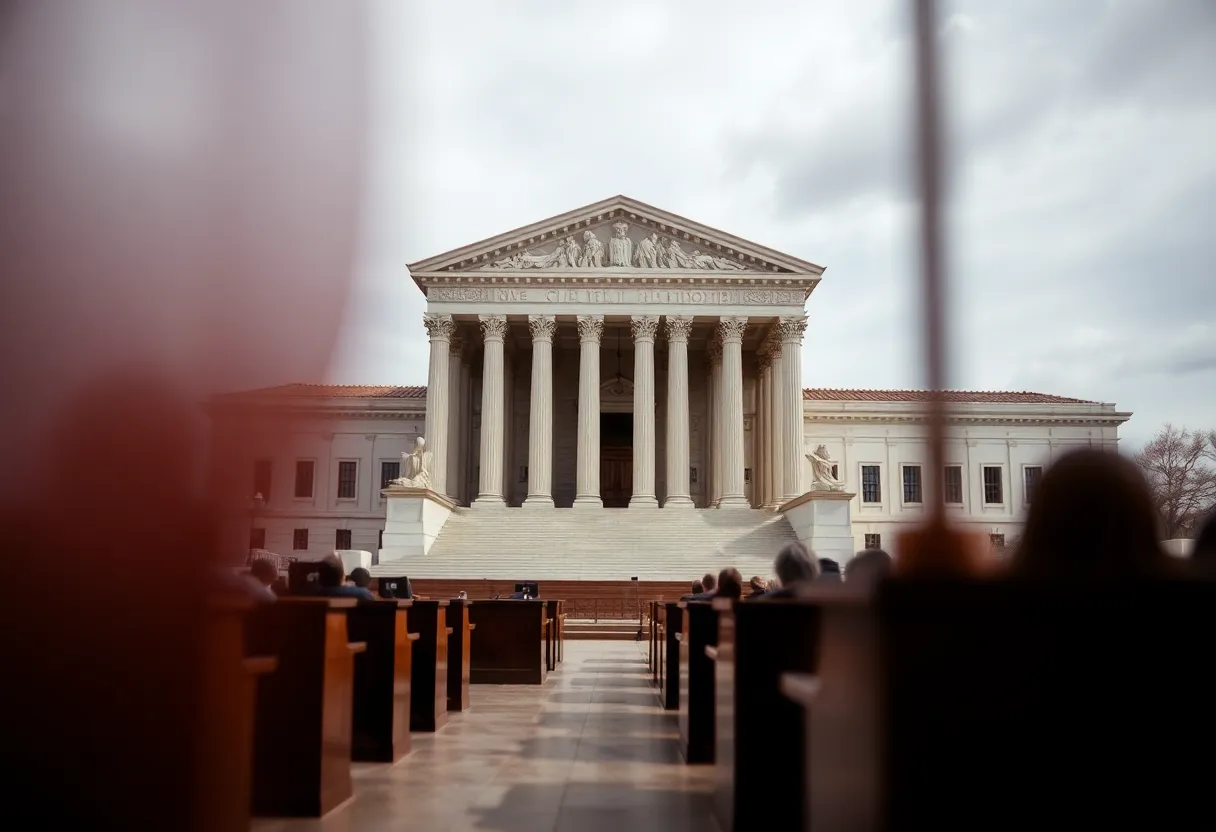
Washington D.C. – The Supreme Court has announced it will reevaluate a crucial case in its upcoming term concerning the constitutionality of racial redistricting practices in Louisiana. This case will determine the legality of Louisiana’s decision to create a second majority-minority congressional seat, which some argue may violate the 14th and 15th Amendments of the U.S. Constitution.
As part of the process, the Supreme Court has ordered involved parties to submit briefs by August 27, 2024, with reply briefs required by October 3, ahead of the court’s next session commencing in 2025. This legal battle originates from prior evaluations of Louisiana’s congressional map, which the court had previously upheld for reargument.
In June, the Supreme Court encouraged further analysis concerning a congressional map endorsed by Louisiana’s Republican-led legislature. This map’s design includes a second majority-Black district, a fact that has garnered significant legal scrutiny from various voter demographics.
Notably, Justice Clarence Thomas expressed dissent regarding the court’s order for additional arguments, advocating for an immediate decision instead. The ongoing legal situations illustrate the volatile nature of redistricting efforts as they collide with constitutional requirements.
The Supreme Court’s recent decision allows the current map, featuring two majority-Black congressional districts, to remain in place while the case proceeds. The issue began intensifying after a three-judge panel invalidated previous district lines in 2022, siding with a group of self-identified “non-African-American voters.” This group claimed that the delineation of these districts set forth an unconstitutional racial gerrymander.
The ongoing dispute is rooted in state efforts to redraw congressional district lines following the 2020 Census, leading to years of complex litigation, including previous Supreme Court evaluations. The two amendments at the center of this case, the 14th and 15th, were crafted to secure equality and voting rights for those formerly enslaved individuals, thus making this legal confrontation pivotal in the broader context of American civil rights.
Additionally, this case underscores the perpetual tension between adhering to the Voting Rights Act and maintaining the Equal Protection Clause as outlined by the Constitution. Civil rights advocates successfully argued that the Voting Rights Act mandated the establishment of two majority-Black congressional districts within Louisiana. In contrast, opponents of the new map assert that the initiative represents an unconstitutional form of racial gerrymandering.
The U.S. Court of Appeals for the 5th Circuit had previously upheld a district court ruling stating that the map established in 2022 might breach Section 2 of the Voting Rights Act. This ongoing challenge comes as Republicans strive to uphold their narrow majority in the House, with the Supreme Court’s eventual ruling anticipated to significantly affect the landscape heading into the 2026 midterm elections.
With briefs from Louisiana and the coalition of Black voters opposing the 2022 map due soon, along with a submission from the “non-African-American voters” group on September 17, there is a sense of urgency around the case. Election law experts have raised alarms regarding the potential consequences of this case, suggesting it might jeopardize the integrity of the Voting Rights Act, which has served a protective role for marginalized communities in the United States.
As the court prepares to review the case, the implications of its decision may extend well beyond Louisiana, rippling into the broader national dialogue on race, representation, and voting rights in America.
Deeper Dive: News & Info About This Topic
- CBS News
- Wikipedia: Voting Rights Act of 1965
- SCOTUS Blog
- Google Search: Louisiana redistricting case
- Politico
- Encyclopedia Britannica: Redistricting
- NBC News
- Google News: Louisiana redistricting